In 1994, the Amateur International Boxing Association (AIBA)—the world governing body for amateur boxing, known at the time as the Association Internationale de Boxe Amateur—formally recognized women’s boxing at its 13th Congress in Beijing. By lifting its longstanding prohibition on female competitors, the organization dismantled decades of institutional barriers, legitimized female fighters on the international stage, and set the sport on a direct path toward Olympic inclusion.
For much of the twentieth century, women were systematically excluded from sanctioned amateur boxing. Athletic commissions and national federations frequently relied on unsubstantiated medical claims and rigid gender norms to keep women out of the ring. Although women’s boxing had appeared as a demonstration event at the 1904 Olympic Games in St. Louis, international and national federations refused to grant women permanent official standing for ninety years afterward.
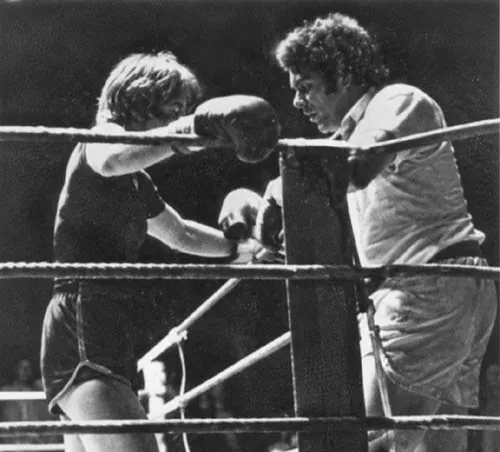
Despite the official bans, determined pioneers fought to prove women belonged in the amateur ring. In the spring of 1978, former Air Force boxing champion Dr. Bill Paul, working alongside Minnesota State Boxing Commission appointee Judy Klammer and the University of Minnesota Women’s Boxing Club, challenged the Amateur Athletic Union (AAU) in Minnesota. After being blocked from a state tournament card in April, Paul and the boxers protested until they secured local AAU sanctioning. On May 12, 1978, at the Bierman Building in Minneapolis, fighters including Claire Buckner, Mary Byrne, Karin Schoen, Anita Howard, Debbie Kaufman, and Natalie Onefeather competed in the first AAU-sanctioned female amateur bouts in United States history.
While the 1978 Minnesota fights proved women could compete safely under amateur rules, national governing bodies and AIBA still refused to lift their overarching bans. The global prohibition only began to permanently fracture a decade later through sustained international advocacy and courtroom battles. Sweden became the first nation to officially integrate women’s amateur boxing in 1988. Four years later, on April 16, 1992, American boxer Gail Grandchamp concluded an eight-year legal fight in Massachusetts when a Superior Court judge ruled that denying someone the right to box based on gender was illegal. That legal momentum culminated in 1993, when sixteen-year-old Dallas Malloy, supported by the American Civil Liberties Union, filed a federal discrimination lawsuit against USA Boxing. Following a preliminary court injunction, USA Boxing settled the case and permanently lifted its ban, leading to Malloy’s October 30, 1993 bout against Heather Poyner in Lynnwood, Washington.
With national federations in North America and Europe finally opening their doors permanently, AIBA recognized that maintaining a worldwide ban was no longer tenable. At the 1994 Congress in Beijing, delegates voted to formally approve and integrate women’s boxing into AIBA’s global framework. To govern the newly sanctioned division, the association established standardized international regulations and safety protocols tailored for female athletes, introducing shorter round durations alongside mandatory protective equipment such as headgear and breast protectors—equipment that Bill Paul had helped pioneer in Minnesota years earlier.
AIBA’s 1994 decision sparked rapid structural change across the boxing world. In 1995, the prestigious New York Golden Gloves opened its tournament to female competitors for the first time. One year later, in 1996, the Amateur Boxing Association of England voted to end its 116-year ban on women’s boxing, while USA Boxing hosted its inaugural women’s national championships in 1997. International competition expanded rapidly as well, leading to the first AIBA-approved European Cup for women in 1999 and the inaugural AIBA Women’s World Boxing Championships in 2001.
Ultimately, the global growth triggered by the 1994 ruling reshaped the Olympic landscape. With participation expanding to hundreds of thousands of licensed female boxers across more than 120 countries, the International Olympic Committee voted in August 2009 to add women’s boxing to the Olympic program. When female boxers stepped into the ring as official medal contenders at the London 2012 Games, they fulfilled a century-long struggle carried forward by grassroots trailblazers in 1978 and cemented by AIBA’s historic 1994 vote.
About the Author